
"Japanese brewing"
3000 article(s) found
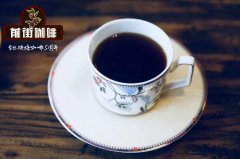
What is the pine house hand punch? What are the characteristics of coffee made with pine house style?
Professional coffee knowledge exchange more information about coffee beans Please follow the coffee workshop (Wechat official account cafe_style) Japanese coffee is brewed by hand. Generally, handmade coffee is mainly made by siphon plug kettle, mocha kettle and follicle brewing, and manual brewing coffee can faithfully present the different personalities of different coffee beans in Japanese cafes, mostly single.
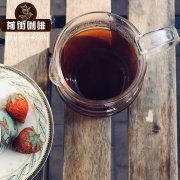
What are the Japanese-style hand flushing methods? What's the difference?
Professional coffee knowledge exchange more coffee bean information please follow the coffee workshop (Wechat official account cafe_style) Japanese hand-made coffee, it will be very full-bodied, very smooth, distinct texture. On the one hand, it depends on the Japanese baker, will control the bitterness of deep-baked beans in a comfortable range, the smoky smell will not cause choking; or selectively drain clean, or leave a little too much
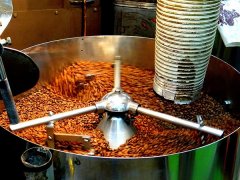
Coffee Culture in Japan-- the History of hand-made Coffee and Cafe
Exchange of professional baristas Please follow the Coffee Workshop (Wechat official account cafe_style) when in Tokyo, I like to stop in different corners of the city and sit in the coffee shop around the street for a while, such as gallery to Genzu in Nanqingshan, Dafang cafe that comes out of the subway station, and Caf de Lambre when shopping in Ginza. The pace of life is extreme.
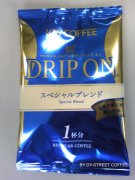
Hanging ear type drip filter coffee brewing
The Japanese like to compare the list of filter coffee, it is estimated that this kind of bagged filter coffee can only be seen in Japan. It feels very simple, but very exquisite, just like their cakes and snacks. This bag is KEY COFFEE's filtered coffee, mixed coffee beans. [the name of the country of the original student]: the name of the country, the name of the country, the name of the country.
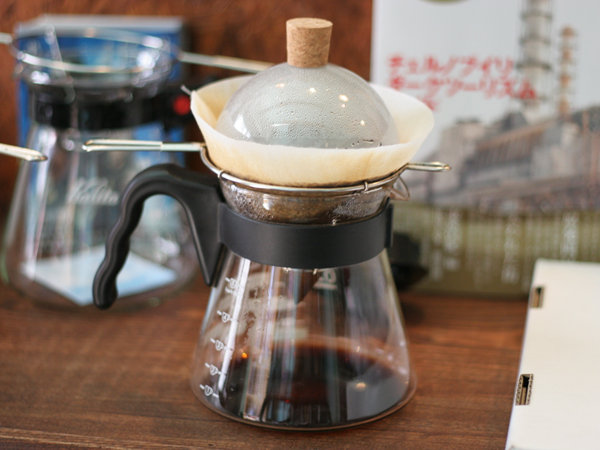
Japanese traditional hand flush genre-"Matsuya hand flush" extraction concept explanation _ Matsuya hand flush how to flush
Professional coffee knowledge exchange more coffee bean information please follow the coffee workshop (Wechat official account cafe_style) usually listen to a lot of one knife, three knife flow, today to introduce to you a relatively strange traditional Japanese style hand flush genre Matsushita hand flush is invented by Matsushita in 1962. He has developed a filter that will not interfere with the expansion of the powder layer.

Flavor and taste characteristics of hand-brewed coffee the proportion of water temperature and powder in Japanese ice-washed Kenyan coffee
Qianjie-Kenya Kainamui processing Club brewing and sharing boutique coffee has filled the life of modern urbanites. It is a magical drink that can taste different producing areas and different flavors. Boutique coffee is also advancing by leaps and bounds on the road of development in China, constantly giving life to those who love coffee with better and better quality coffee. Boutique coffee focuses on reflecting

The charm of Taiwan coffee beans makes the Japanese deeply trapped.
A few years ago, Mr. Ito had an opportunity to drink a cup of coffee that he could not forget. After careful questioning, he found that the coffee beans of this cup were produced in Alishan, the main island of Taiwan. From then on, a Japanese fell in love with Taiwanese coffee beans. He quit his original job and began to study how to bake Taiwan coffee beans, and even the whole family moved to Taiwan.

Japanese iced coffee powder water ratio how much appropriate hand brewed iced coffee should use what grinding degree
Professional barista communication, please pay attention to coffee workshop (Weixin Official Accounts cafe_style) For iced coffee, beans with low acidity and strong bitterness are suitable. The deeper the roast, the lower the acidity. So I'll show you how to make delicious iced coffee using this very roasted mantinin. There are different ways to make iced coffee. In the water injection method, water is injected into a sharing pot,

How to make delicious Japanese iced coffee? Teaching the steps of making hand-made iced coffee
Professional coffee knowledge exchange more information about coffee beans Please follow the coffee workshop (Wechat official account cafe_style) it's great to have a cup of iced coffee in summer! With a few tricks, you can successfully make delicious Japanese iced coffee every time, so that you can enjoy it all summer. But before we teach you how to do it, we must first understand that iced coffee and cold coffee are two different kinds of coffee.

Japanese Hario Harrio V60 Spiral Ceramic Coffee filter Cup hand-brewed Coffee filter Cup
[product name]: V60 spiral drip filter coffee cup [color]: White, red, brown [material]: heat-resistant ceramic [model]: VDC-01W length: 119mm. Width: 100mm. High: 82mm. Caliber: 95mm 1-2 people use why we choose ceramic filter cup? What's so good about it? Ceramic heat volume: 840J/ (KG ℃) glass heat volume: 600J/ (KG ℃) can see ceramic specific glass.

Japanese Hario Harrio V60 Spiral Ceramic Coffee Cup drip filter Cup hand-brewed Coffee
[product name]: V60 spiral drip filter coffee cup [color]: White, red, brown [material]: heat-resistant ceramic [model]: VDC-01W [packaging]: filter cup * 1. Coffee spoon * 1 length: 119mm. Width: 100mm. High: 82mm. Caliber: 95mm 1-2 people use why we choose ceramic filter cup? What's so good about it? Ceramic heat volume: 840J/ (KG ℃) glass heat volume: 60

Demonstration of Japanese ice hand brewing coffee-how to make ice hand coffee and how to make ice hand coffee
Professional coffee knowledge exchange more information about coffee beans Please follow the recent weather in the coffee workshop (Wechat official account cafe_style). It really makes people hot every minute. It is definitely a passing friendship to meet happily in a cafe in this weather. However, even in such hot weather, you can't stop drinking coffee? So, if you don't want to go out, buy

Introduction to coffee brewing utensils: Japanese Noda enamel moon rabbit printing six-color series classic coffee hand brewing pot
Brand: Noda Noda color classification: White, red, blue, brown, yellow, black, white, 1.2L, red, 1.2L, blue, 1.2L, brown, 1.2L, 1.2L, black, 1.2L, coffee pot classification: fine mouth pot material: precious metal Noda enamel is a well-known brand of water and kitchen utensils in Japan, its products are famous for their elegant shape and excellent glaze. The Moon Rabbit India series is an important part of Noda brand.

Guangzhou Coffee Shop | "Marsh Cafe" A traditional Japanese coffee shop far away from downtown
"if the mountain is not high, if there is an immortal, it will be named. A body of water needs not be deep it would be ensouled, if a dragon makes it its resting whereabouts. "in Nansha District, far from downtown Guangzhou, there is a senior Japanese coffee shop! "Haili Cafe" is located in Nansha Youfang Shopping Park, which can be easily found in the park! Haifu Cafe, one of the earliest cafes in Guangzhou, was founded by a Japanese who came to work in China.

Was the siphon pot invented in Japan? What's the difference between a Japanese siphon pot and a Belgian siphon pot?
Information Please pay attention to coffee workshop (Weixin Official Accounts cafe_style) Syphon pot (Syphon) commonly known as plug pot or siphon type, is a simple and easy to use coffee brewing [1] method, but also one of the most popular coffee brewing methods in cafes. Although siphon pot has the alias of plug wind type, it has nothing to do with siphon principle, but uses water to generate water vapor after heating, causing thermal expansion and contraction principle.

What's the difference between American hand flushing and Japanese hand flushing?
There is a difference between American style and Japanese style. Although both American and Japanese styles may make the same filter cup, there are some differences in roasting, grinding, filter paper, water temperature and manipulation of coffee beans. The biggest difference is that American hand brewing requires stirring coffee powder with a stirring stick at the same time, which is similar to the way we do siphon pots, while Japanese, Korean, Taiwan and domestic hand coffee only draws circles with water and never uses it.

A detailed description of the parameters of Japanese-style iced hand-made coffee first or later
A few days ago, a guest asked how your ice hands make coffee. Is there any difference between adding ice first and adding ice later? In this issue, Qianjie will do an experiment to compare it, hoping to give you a reference. Qianjie ice hand brewing coffee parameters sharing Qianjie ice hand brewing coffee using 15g coffee powder, the ratio of powder to water is 1:10, that is, 15g coffee powder brewing 150g hot water, and then

Kalita Japanese kalita handmade copper pot fine mouth pot coffee hand pot 600ml coffee brew pot
Japanese authentic KALITA 600ml copper pot [origin]: Japan [material]: copper [capacity]: 600ml [weight]: 465g [bottom diameter]: 85mm [box size]: W175 x D100 x H160 mm Kalita classic copper kettle maximum capacity 600ml, recommended capacity 400ml, because of its small capacity, it is more suitable for use with 1x 2-person filter cups. Adoption of grade fineness

What does Yuji Matcha, one of Japan's three top green tea brands, mean? Yuji Matcha grade
We have talked about the origin of Japanese tea many times before. From the tea tour in Japan to the modern tea ceremony. For example, iced matcha formula. Believe it or not, Japanese elites did not drink iced oat milk matcha lattes in the Edo era. Anyway, today, we're going to show you Yuji in Kyoto, the real Japanese green tea.

Introduction to the types of water consumption for brewing coffee in Italian coffee pot
Introduction to the types of water consumption for brewing coffee in Italian coffee pots Japanese coffee machines, also known as siphon pots, have an alcohol lamp on the base and two glass balls on it. It heats the water from the lower glass ball to produce water vapor, pushes the hot water from the lower sphere to the upper pot, and then sucks back the coffee extracted from the upper glass ball after the lower pot cools. Using a Japanese-style coffee machine to make coffee is as if it is chemical.